
Regenerative Dryers
Planning tools / Sullivan-Palatek
See How a Complete Air System Comes Together
A compressor is one part of a dependable air system. Explore the flow of air through storage, dryers, filtration, drains, and condensate treatment, then build a preliminary system for our team to review.
Explore the Interactive System
Explore available compressor models and equipment in the interactive 3D experience. View components and discover how they fit into a compressed-air system.
Explore the interactive systemBuild a System & Request a Quote
Enter your approximate CFM, pressure and air-quality needs. Review a conceptual configuration, then send your system to Sullivan-Palatek for a formal sales review.
Build a system and request a quoteConcept layouts are for planning, not a final engineering design or binding quotation. Equipment selection, pricing, availability and installation requirements are confirmed by our sales and engineering teams. Serving an Indianapolis-area facility? Explore regional compressor assistance.
DESICCANT AIR DRYER BUYER GUIDANCE
COMPARE REGENERATIVE DESICCANT AIR DRYER DESIGNS
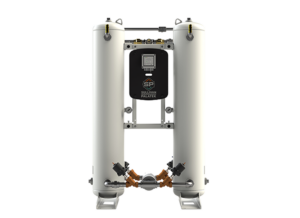
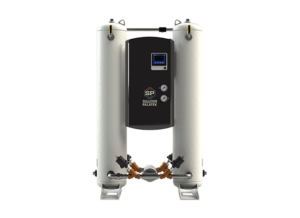
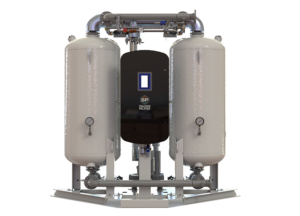
A regenerative desiccant air dryer removes water vapor to support low pressure-dew-point applications. Heatless, heated-purge and blower-purge designs use different regeneration strategies; the most suitable configuration depends on air demand and total operating cost.
DEFINE THE DEW-POINT TARGET
State the pressure dew point needed for production, instruments or outdoor piping. A -40 degrees F pressure dew point is a common specification for desiccant systems, but confirm the selected model's guaranteed rating at the required flow and inlet conditions.
ACCOUNT FOR PURGE AND ENERGY
Heatless dryers use a portion of dry compressed air for regeneration, while heated and blower-purge systems use different combinations of air and thermal energy. Ask for purge-air demand, electrical inputs and full-cycle operating assumptions at the project conditions.
CHECK PROTECTION AND MAINTENANCE
Review upstream and downstream filtration requirements, pressure drop, condensate management, switching valves, desiccant service intervals and alarms. Match these choices to the compressor and receiver system rather than sizing the dryer from compressor horsepower alone.
COMPARE REGENERATIVE DRYER QUOTES ON THE SAME BASIS
- Rated flow at actual inlet pressure and temperature
- Required outlet pressure dew point and expected ambient exposure
- Purge air, heater/blower power and pressure drop
- Service access, filter grades, condensate controls and installed operating cost