
Compressed air by industry
Compressed Air for Abrasive Blasting & Industrial Coating
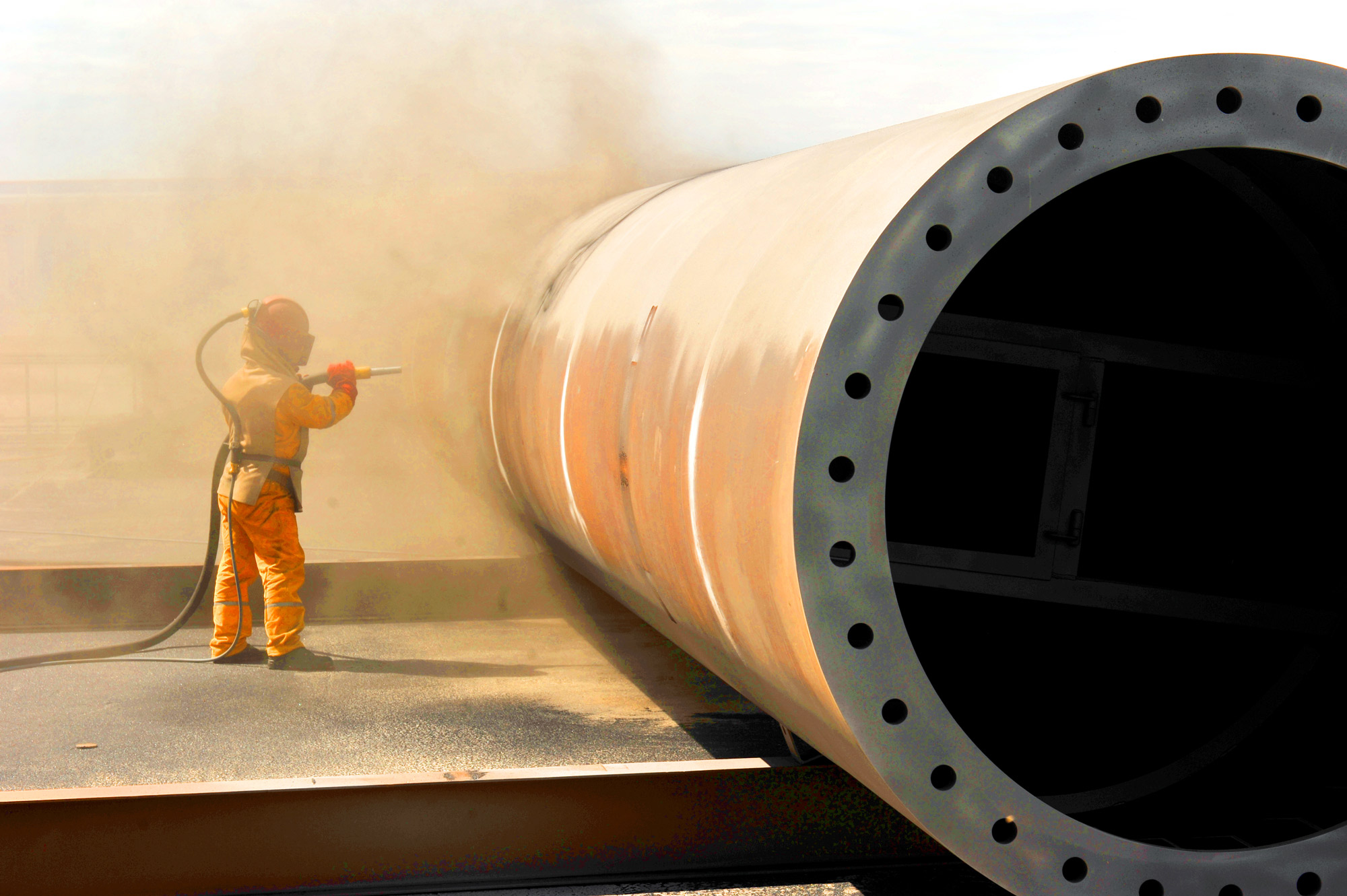
Abrasive blasting combines high air demand with challenging jobsite conditions. Consistent pressure and delivery capacity help operators maintain a predictable blasting process.
Industry perspective
Compressed Air That Fits the Operation
Blast nozzle size, pressure at the nozzle, hose length, and the number of simultaneous operators are essential inputs when selecting a compressor. A large nominal compressor rating cannot compensate for severe distribution losses or an undersized air line. Likewise, jobs that alternate between blasting and coating may have different airflow and cleanliness requirements.
OSHA identifies abrasive blasting as a process in which compressed air or water propels abrasive material at high velocity. The work involves serious dust and respiratory hazards. Air for breathing-air respirators is a separately controlled, regulated system; industrial compressor discharge must never be assumed suitable for breathing air.
Where air is used
Typical Compressed-Air Applications
Actual needs vary with equipment, point-of-use requirements, and operating conditions.
Field Abrasive Blasting
Portable air supply for compatible blasting pots and nozzles used on structures or equipment.
Fabrication Finishing
Compressed air for suitable shop blast rooms, tools, and material preparation.
Coating Support
Pneumatic tools and properly treated compressed air for approved spray equipment.
System design
What Matters When Selecting a Compressor
Nozzle CFM
Size around required nozzle pressure and total simultaneous airflow.
Air-Line Losses
Account for hoses, fittings, filtration, and pressure drop at operating flow.
Worker Safety
Separate process air from breathing air and apply the appropriate protective controls.
Planning checklist
Before Requesting a Quote
A few accurate details help narrow down equipment, air-treatment needs, and configuration options.
- Record nozzle count, nozzle size, and required working pressure.
- Allow for pressure loss through long hoses and distribution piping.
- Decide whether processes need additional drying or filtration.
- Coordinate site dust controls and worker-protection procedures.
Explore Sullivan-Palatek
Related Compressed-Air Solutions
Quick answers
Frequently Asked Questions
What matters more: CFM or PSI for blasting?
Both. Nozzle pressure affects the process, while sufficient CFM is needed to maintain that pressure at the selected nozzle configuration.
Can the same compressor supply a blast nozzle and a respirator?
Breathing-air systems have distinct regulatory and air-quality requirements; industrial compressed air must not be used for respiratory protection without a properly designed and verified breathing-air system.
Central Indiana / Indianapolis
Need an Industrial Air Compressor for Your Operation?
For facilities in Indianapolis and surrounding Central Indiana, request help reviewing air demand, pressure, treatment needs, and equipment options. Sullivan-Palatek is headquartered in Michigan City, Indiana.