
Industrial Electric Air Compressors
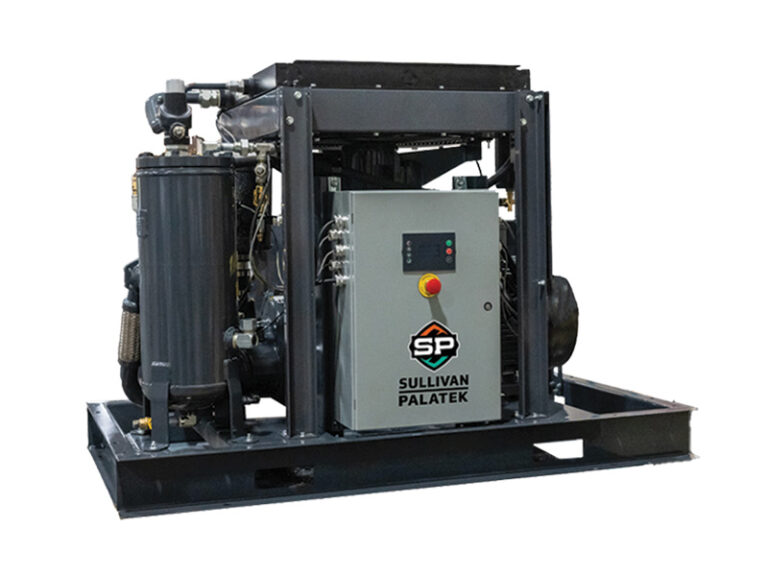
Sullivan-Palatek industrial electric rotary screw air compressors supply manufacturing lines, assembly equipment, packaging machinery and pneumatic air tools. Compare fixed-speed equipment and variable-speed rotary screw compressor options using required airflow (CFM), operating pressure (PSI), shift schedules and changes in plant air demand.
Use published specifications and industrial electric CAGI data sheets to compare model ratings. For these industrial applications, account for distribution pressure loss, receiver capacity, air treatment (filtration and drying), ventilation and maintenance access. Specify air purity at the point of use; compressor selection alone does not establish air quality.
An industrial rotary screw air compressor is best evaluated as part of the entire plant network. A unit serving steady production may behave differently from one supporting intermittent shifts or several pneumatic tool stations. Check demand at the equipment, pressure lost through dryers and filters, and available receiver storage before choosing motor size. These inputs help determine whether fixed-speed capacity or a variable-speed rotary screw compressor is a better fit.
Energy efficiency also depends on the system around the machine. Leaks, unnecessary pressure and poorly matched controls can waste power regardless of compressor type. Compare published performance at relevant operating conditions rather than assuming every VFD application produces identical savings. For a useful quote, provide required CFM and PSI, available voltage, operating hours, air-quality targets and details of the compressor being replaced, if any.
ENGINEERING SELECTION GUIDE
Match the Compressor to Plant Air Demand
Record the airflow needed by production cells, air tools and equipment that may operate at the same time. Measure typical and peak CFM, minimum pressure at the point of use (PSI), and demand changes across shifts. Include piping losses, dryer and filter pressure drop, air storage and planned expansion before choosing a compressor.
Fixed-Speed or Variable-Speed Rotary Screw?
A fixed-speed rotary screw compressor can be an effective choice when plant demand is fairly steady. A variable-speed rotary screw compressor uses a variable-frequency drive (VFD) to adjust motor speed as demand changes. Compare part-load performance, duty cycle, controls and the complete air system before estimating energy efficiency or operating cost.
Serving an Indianapolis or Central Indiana facility? Explore Indianapolis industrial electric compressor sales, sizing guidance and quote support.




Planning tools / Sullivan-Palatek
See How a Complete Air System Comes Together
A compressor is one part of a dependable air system. Explore the flow of air through storage, dryers, filtration, drains, and condensate treatment, then build a preliminary system for our team to review.
Explore the Interactive System
Explore available compressor models and equipment in the interactive 3D experience. View components and discover how they fit into a compressed-air system.
Explore the interactive systemBuild a System & Request a Quote
Enter your approximate CFM, pressure and air-quality needs. Review a conceptual configuration, then send your system to Sullivan-Palatek for a formal sales review.
Build a system and request a quoteConcept layouts are for planning, not a final engineering design or binding quotation. Equipment selection, pricing, availability and installation requirements are confirmed by our sales and engineering teams. Serving an Indianapolis-area facility? Explore regional compressor assistance.
INDUSTRIAL COMPRESSOR BUYER GUIDANCE
BUILD A COMPARABLE INDUSTRIAL ROTARY SCREW COMPRESSOR QUOTE
A useful industrial electric air compressor proposal starts with measured plant requirements, not a horsepower number alone. Ask suppliers to show what each proposed rotary screw package delivers at the operating conditions your facility actually needs.
DEFINE AIRFLOW AND PRESSURE
Measure simultaneous air use during a typical shift and peak production. Record required delivered airflow (CFM) and minimum pressure (PSI) at the critical point of use, then account for verified losses through filters, dryers and plant piping. Match quoted compressor capacity to the rated discharge pressure rather than comparing nameplate horsepower in isolation.
COMPARE CONTROL STRATEGY
For steady demand, evaluate fixed-speed rotary screw options and their loading behavior. For material demand swings, evaluate variable-frequency-drive compressor options against measured load profiles. Request performance and control assumptions for both options; a VFD does not guarantee savings in every application.
SPECIFY THE COMPLETE SYSTEM
Include receiver storage, condensate handling, air quality, ventilation, electrical service and routine maintenance access. Compare published performance data at equivalent pressure and conditions, and document the responsibilities for system integration before approving equipment.
INFORMATION TO INCLUDE WITH AN INDUSTRIAL COMPRESSOR RFQ
- Average and peak measured CFM, required point-of-use PSI and expected duty cycle
- Electrical supply, available floor space, ventilation and ambient operating conditions
- Dryer dew point, filtration requirements, receiver capacity and distribution constraints
- Existing compressor model, observed pressure losses, maintenance history and future demand
- Comparable power/performance data, warranty, installation scope and confirmed lead times
Application to equipment
Continue Your Compressed-Air Research
Connect this information with relevant applications, published equipment and technical references. Final equipment selection requires an application-specific review.